Category: Reviews

  • Evercade Nexus impressions

    Evercade Nexus impressions

    (Tagged as a review, but these are essentially impressions after a 30 hour period with a retail Evercade Nexus 64 Edition console. That’s 30 hours since it arrived. Actual usage time is 2-3 hours)

    I stumbled into the Evercade eco-system around 18 months ago. The Neo Geo Super Pocket had been announced, and for £49.99 a dinky handheld device with some classic Neo Geo games to play on the train felt like a solid deal. And unlike some of the other handheld devices I have, having a small number of curated games felt like a great way to avoid the inevitable choice paralysis I often face when picking up the Analogue Pocket, or DS.

    From there I started to pick up additional cartridges. Each with a set of anywhere between 2 and dozens of games from a particular company. And every cartridge fits into every device, whether that’s the tiny GameBoy like Super Pocket, or even the console like VS-R. For people who don’t own original hardware, or even just like the tactile experience of cramming a cartridge into a slot, it’s honestly a fantastic way to play some retro games.
    Evercade Nexus
    Evercade Nexus


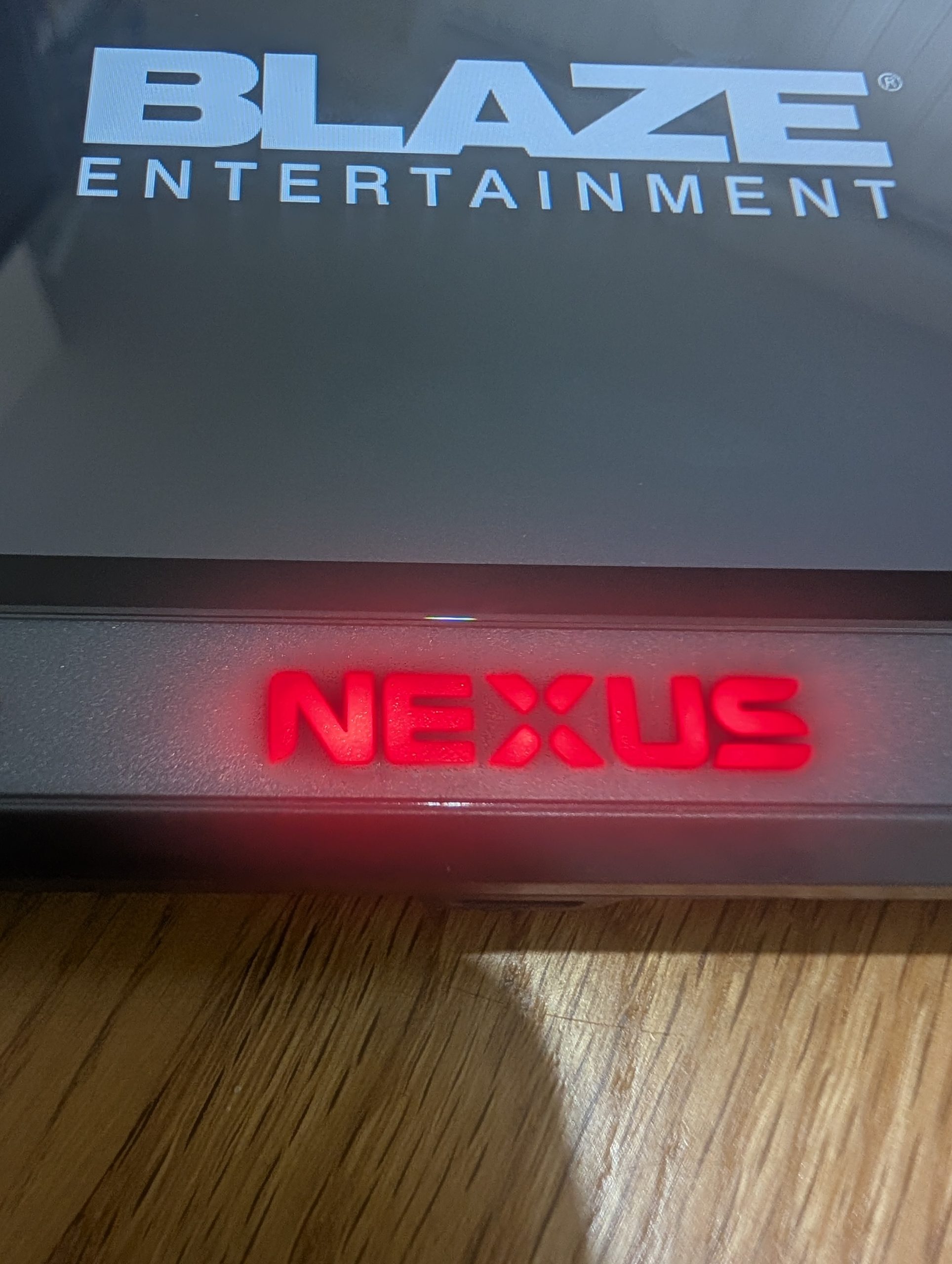
    The Evercade Nexus arrives as a brand new handheld, which still plays all the same cartridges you may already own. But it’s much more expensive (the Evercade Nexus 64 Edition which comes with the bonus goodies of a cartridge containing Banjo-Kazooie and Banjo-Tooie, a special case, and a slightly different colour of device compared to stock) device which you’d hope would deliver a more premium experience. And, for me in my short time with it so far, it does exactly that.

    Size wise it’s very similar to a Switch light. It’s right on the border of portability for me. Moving it around my home and playing in bed, on the sofa, or at my work desk is likely to be my main use case. Personally I prefer something smaller when I’m travelling. Your mileage may vary. I’ve never been a fan of carting the Steam Deck around taking up half my travel space, but if you could handle that then you’ll likely appreciate the smaller nature of the Nexus

    The device itself certainly feels more premium in your hands than the tiny Super Pockets (I can’t compare with the Evercade EXP-R as I’ve never actually owned or played with one) but I’d argue a step behind the real sort of premium experience you get with a Steam Deck or a Nintendo Switch 2. Which considering the price point of this is far lower than those, could arguably be expected.  

    To hold, I appreciate the slightly textured areas on the back of the device where your hands will sit. Handhelds can start to feel slightly slippy after some extended play, and this so far has avoided any of that kind of concern.I would have appreciated some sort of curvature in the same sort of area though. Right now it feels like I’m holding the device in an ever so slightly unnatural way. I don’t necessarily mean something as pronounced as the Steam Deck and its huge handholds, but something in between the two might make longer stints of play more comfortable.
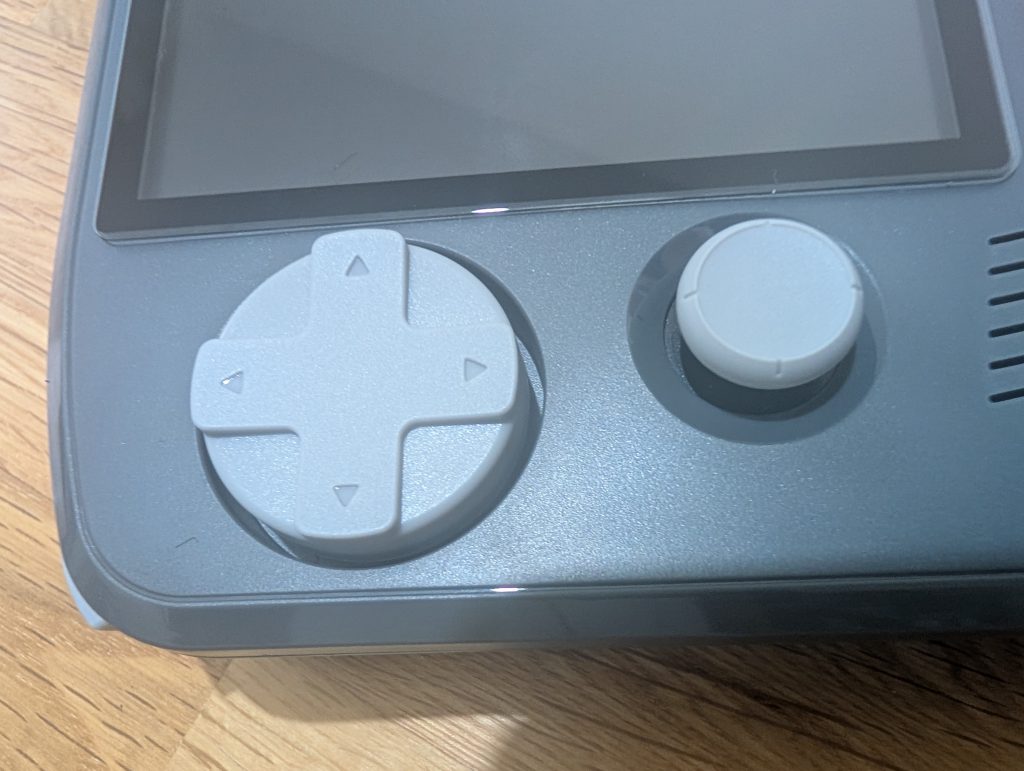
    Evercade Nexus d-pad and analogue stick
    Evercade Nexus


    The controls feel pretty much what I’d hoped they’d feel like. My experience with the VS-R controller which I really didn’t gel with meant this was an area I felt mildly wary of. The circular d-pad is nicely raised and feels like it’ll withstand the battering it’s inevitably going to get over the years. Is it the greatest d-pad I’ve ever used? No. But it’s good enough. Same with the face and shoulder buttons. They’re not perfect or have the super premium feel of the more expensive handhelds, but they feel like they’re going to do a solid job. Obviously time will tell. But this initial burst has raised my confidence levels a huge amount.

    The analogue sticks I really like. I’ve only used them for a relatively short period of time with Banjo-Kazooie, but I’m a fan. They feel pleasant on my thumbs and nicely accurate. Because they’re both at the bottom of the device, it does make holding and playing analogue stick based games ever so slightly more awkward. It’s not a deal breaker, but I’m not sure I could see myself playing Banjo-Kazooie for multiple hours in a row without a hint of cramp. I could be wrong, I’ll need to test things for a more extensive stint to figure that out.
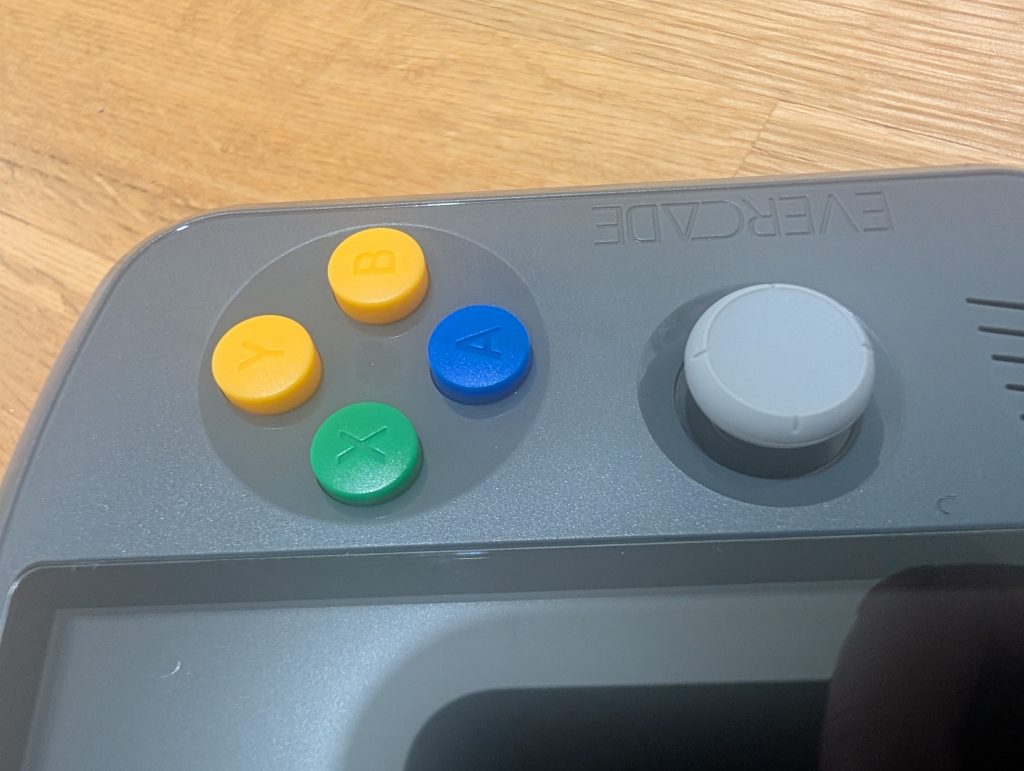
    Evercade Nexus face buttons and analogue stick
    Evercade Nexus


    The screen, while it is a shame it’s not an OLED, is a big step up from the Super Pocket. Colours feel more, well, colourful. There’s less of that slightly muted feel that the Super Pocket has in my experience. Most importantly games themselves, especially the shorts of shmups I love to play recently, are so much more enjoyable with the bigger screen. The usual options of adding a scanline mask remain and I highly advocate for making use of that option.

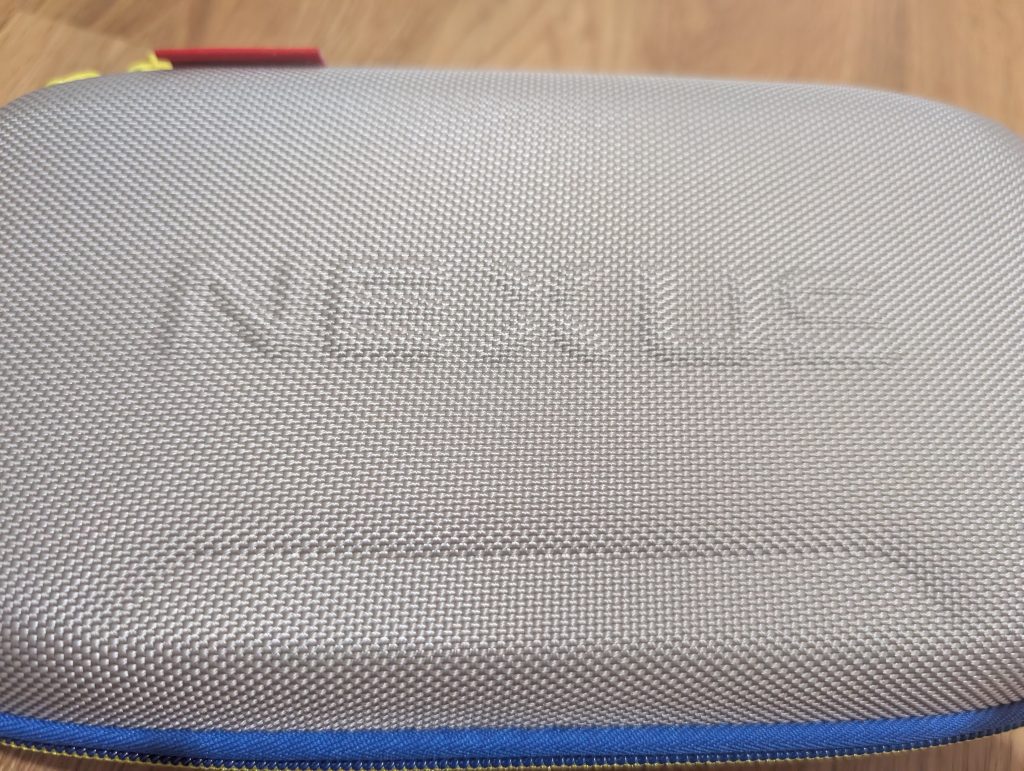
    The included case feels solid, and the screen protectors (two were in the box, which I always appreciate in case an application goes a bit wrong) certainly feel like they’ll keep that lovely screen safe from scratches. You get a charging cable, but no actual plug as is now the norm with these sorts of things. But chances are like me you’ve got seventeen options stashed away already.

    I guess to sum all this up, so far it feels like a really nice inclusion to the Evercade family. It’s a premium feeling handheld to go with it’s closer to premium price. And for those of you like me with a huge stack of cartridges all ready and waiting, it’ll give a whole new lease of life to those hundreds of curated games. I’ll try and revisit this with additional thoughts in a few months time, but right now I’m pretty pleased I picked this up.
  • Big Walk (PC Steam) review

    Big Walk (PC Steam) review

    I’m not really one for histrionics. In my years of doing this sort of thing and somehow convincing people to pay me to do so, I don’t recall ever calling something a ‘must play’ or uttering ‘everyone has to experience this’ because neither of those statements can ever be true. I bloody love Sega Rally with every fibre of my being. But blimey, how can I even call that slice of absolute genius a ‘must play’ when some people who play games hate driving? Or what about those who’ve tried and despised 3D games?

    But I think Big Walk is the closest I’ve ever got to saying ‘everyone has to experience this’ and truly meant it. And even then there’s a really massive caveat to that statement which I’ll come on to shortly.

    So what is Big Walk? Created by the same people who made Untitled Goose Game – another great game, but also one with enough flaws to make it difficult to recommend for all – it’s essentially a combination of exploration simulator, and hardcore puzzler. But rather than an UbiSoft style collect-a-thon with several billion icons dotted around a giant map, this time it’s all about hanging out with your friends.

    Now I’ll admit that I am likely the absolute pinnacle of the perfect player of Big Walk. With a group of gaming friends, we’ve been playing co-op titles for quite a few years now. Often weekly for hours at a time. So finding a bundle of like minded and pleasant people I’m happy to play regularly with was as simple as dropping a message into a group chat.

    And I think this is actually the key point about Big Walk. Do you have a similar handful of friends you can play with regularly? Then you’re sorted. Are you someone who doesn’t have a close knit friendship group and you’re not overly keen on finding people to join with and spend a dozen or more hours figuring out puzzles, arguing over who carries what, and spending stretches simply wandering through wooded areas trying to figure out where to go next? Then you might really fail to experience the absolute joy that Big Walk contains.

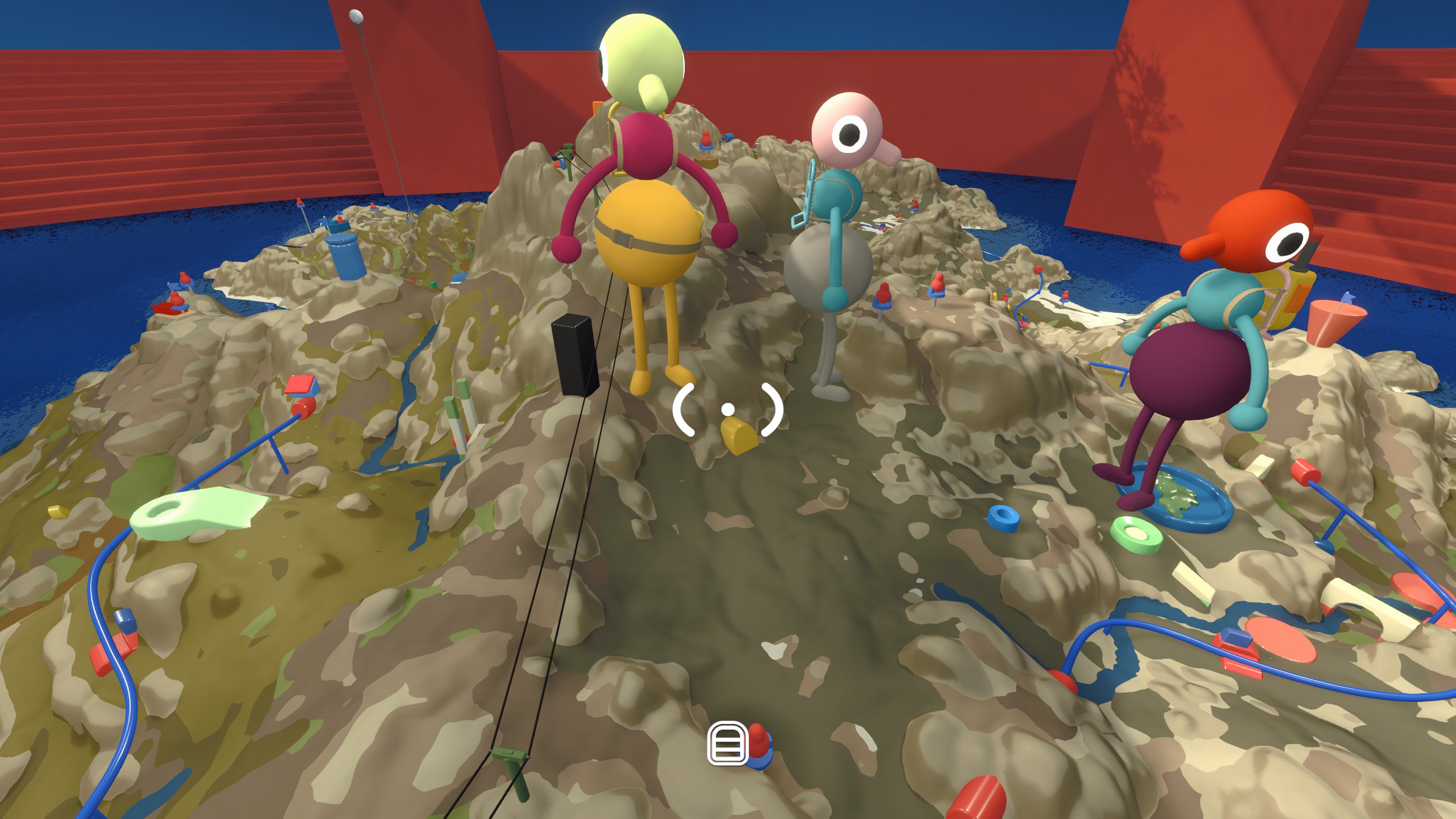
    You start simply enough. You all find yourselves in this bright and colourful space which teaches you all the pretty simple controls you’ll need to learn in order to solve some of the wicked puzzles ahead. Then, things open up. And now you can explore. While there is a semblance of structure to proceedings (which I won’t spoil here – it’s best to figure it all out within your little group) especially early on, there’s a huge amount of freedom. Spot a far off hill with some weird structure atop it? Then why don’t you convince your chums to come join you as you explore it. You’ve got the full freedom to do so.

    The essence of Big Walk is solving the quite epic number of puzzles. I’m told that these puzzles change based on the number of players you have, but for the group of 4 or 5 we had the entire way through, we stumbled across some that took a couple of minutes to figure out and complete. Others we struggled with, proceeded elsewhere, and eventually came back to once we’d made other discoveries and could figure out what we needed to do, and how we could do it effectively.

    Some of these puzzles are genuinely quite fiendish, but we never came across any that were unfair. Some will tax your brain, others your dexterity. Lots of them could be solved in multiple ways. What I absolutely would advise is to use the proximity chat in game. You’ll understand why once you start playing.

    You’ll gradually discover items to help. Some are just handy to carry with you to make finding each other when one of you inevitably tumbles off a cliff a little easier. Others can make the even the trickiest of puzzles now solvable. 

    No two puzzles (that I’ve witnessed anyway) are the same. Some may have similarities with others, but others are just entirely unique. Some you’ll come across and you’ll struggle to not exclaim something out loud when you start exploring some brand new location and the tricky puzzle the developers have left for you to find. Eventually you’ll unlock something to make it easier to find these new puzzles. And even ways to make traversing the landscape quicker. Though do still expect plenty of time for exploration where your main job will be to chat to your gaming pals as you fling your arms in the air, and highlight yet another far off point you’ll have to head to next.

    We have reached the end of Big Walk, only to discover there’s still more to do. And the 14 or 15 hours that’s taken have honestly been my most favourite gaming memories of the last year. The sheer joy of figuring out a puzzle collectively, taking on the challenge, completing it, and pushing on and exploring elsewhere has been a consistently pleasant experience.

    As long as you have that group of friends available (Big Walk supports Crossplay, so format concerns are thankfully removed too) then Big Walk can’t come recommended highly enough. It’s the sort of feeling I expect I must have had playing the likes of Buggy Boy, Elite, and Paradroid so so many years ago when gaming felt so fresh and exciting as a youngster. Just complete and utter joy.

    Verdict: Get it bought

  • Coming soon

    It’s been a while. Life is busy. But I’ll be back, shortly. With one thing that’s a bit more recent with a review of sorts of the bloody brilliant Big Walk. And some sort of review of the Evercade Nexus which appeared just this morning.

  • ReStory: Chill Electronics Repairs (PC Steam) Review

    ReStory: Chill Electronics Repairs (PC Steam) Review

    I do mention that updates could be sporadic, and often what I focus on could seem a little unusual considering this site’s name. But hey, ReStory does feature representations of some much loved retro consoles and controllers (as well as quirky tech) so I’m claiming to have not drifted too far off track. Plus I’ve been playing/enjoying it a lot the last couple of weeks and felt like jotting down my thoughts.

    ReStory lives up to that ‘Chill’ part of its name pretty perfectly. While I’ll enjoy and try to pretend that I’m getting better at Sol-Deace or pretty much any R-Type game, in my more mature gaming years (I’m old) I do yearn for something slightly less frantic at the end of a working day when I’m eager to decompress.

    And ReStory does that perfectly. The story – which I admit I didn’t spend too much time trying to digest – plods along in short little bouts of text from a bunch of different static characters entirely at the pace you want. Yes you can rush through, doing the jobs the story deems necessary for progression and hit the next beat in next to no time. But the game has no issues with you slowly tinkering and fixing some dinky little devices at your own pace, and it’ll not try and encourage you to speed up, or scold you for taking your time. It puts you in control, and blimey that’s a very nice thing for this sort of game.

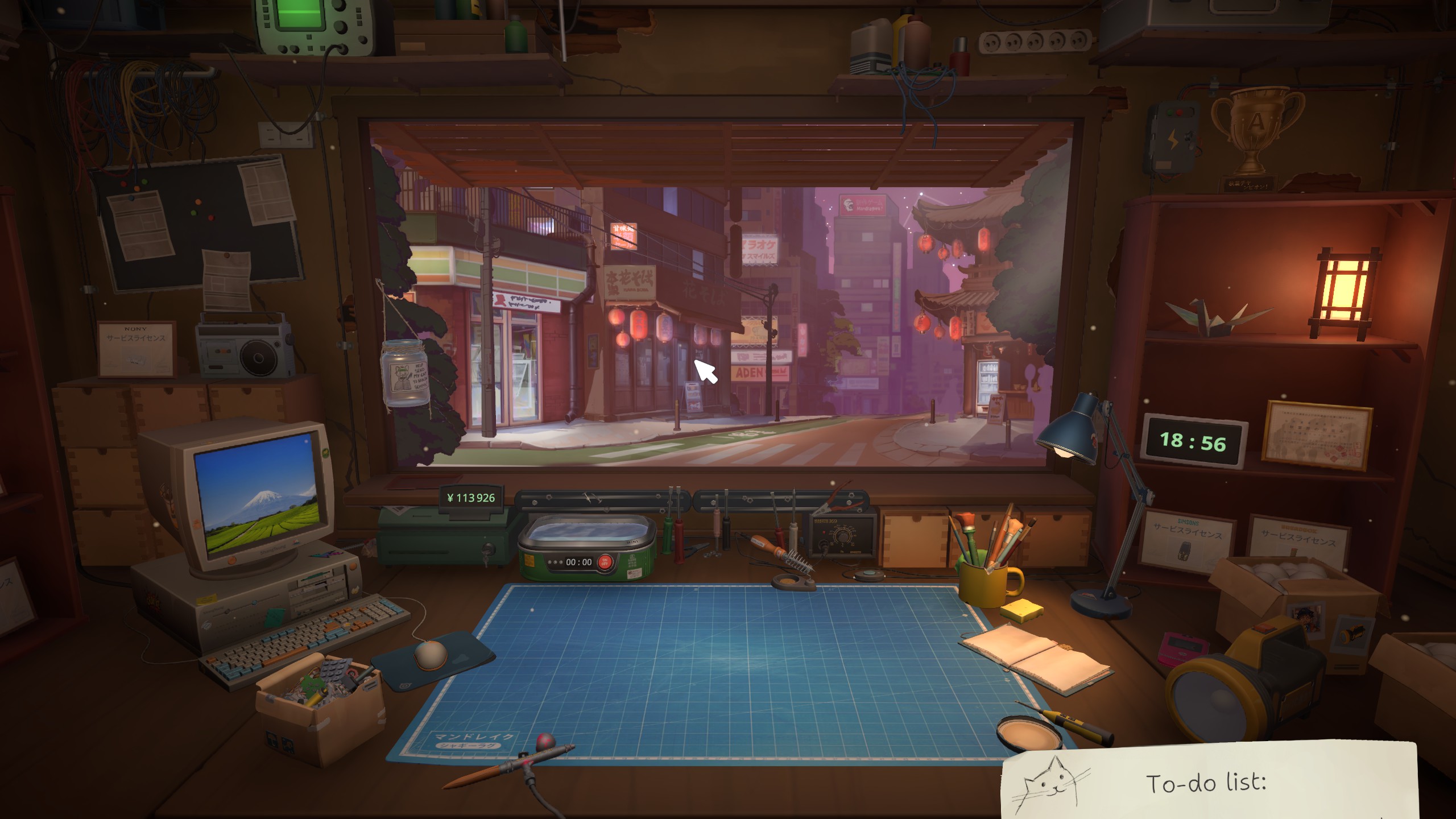
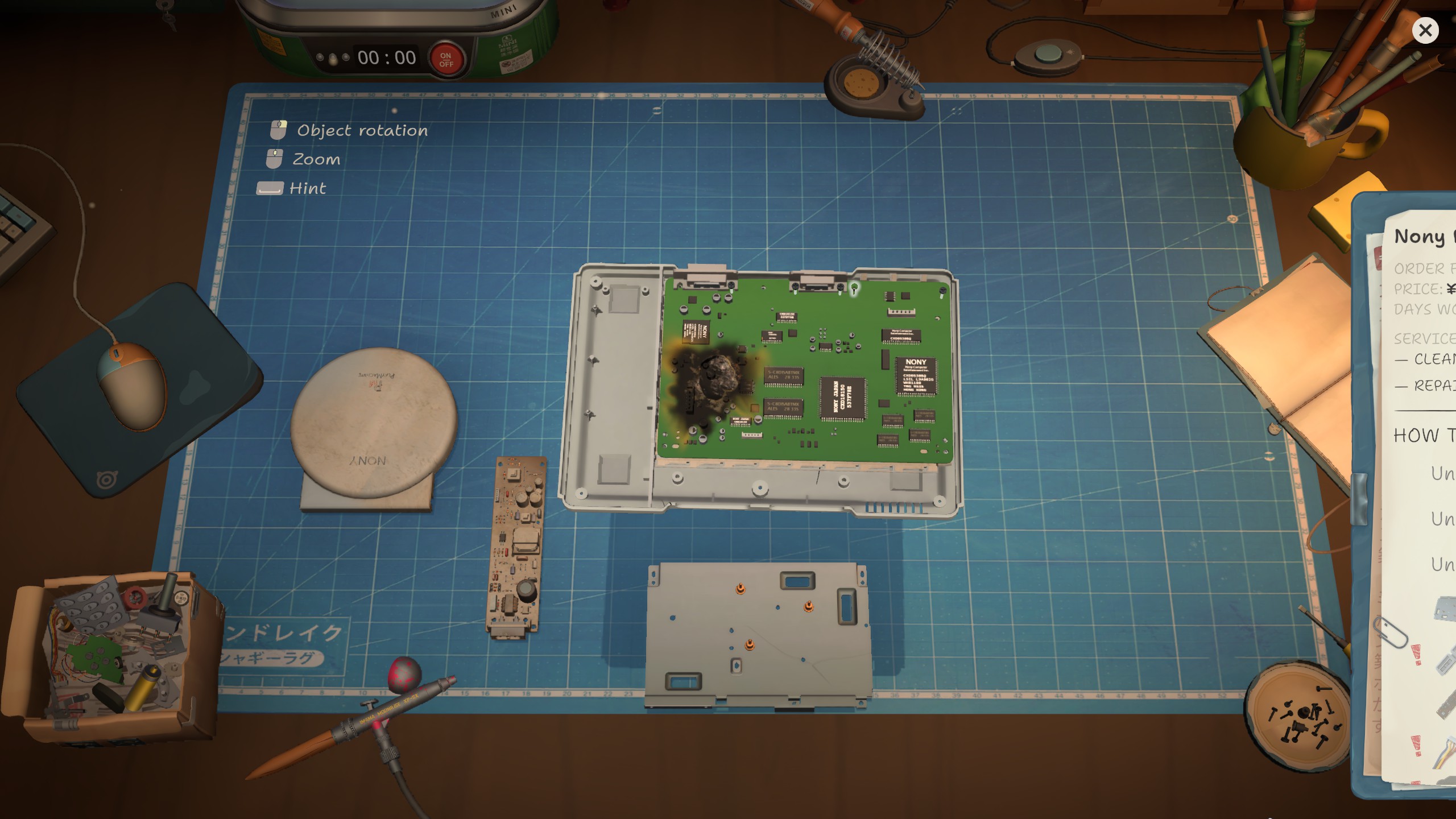
    Playing it is very simple. You take on a repair job of a particular device, drag it onto your desk, take it apart, clean/repair/paint as required, then it gets picked up and you receive a wedge of cash. There’s nothing hectic or pressured about it. It feels calm and comfortable with you simply tinkering until you eventually end up with a finished repair.

    I played with mouse and keyboard, and tinkering in general works perfectly. A simple tap and hold to unscrew, a click and hold to take things apart and drop them on your desk, and the same again to put them in place. It’s intuitive, simple, and the white highlights that pop up when you’re clearly trying to put the right piece X into slot Y avoids any major frustration when you’re faced with slotting together a mildly complicated laptop or old school film camera.


    ReStory review screenshot

    It’s not perfect. Some items towards the latter stages do feel a little too complicated. And sometimes that flash of white to indicate you’re doing the right thing pops up only when you’re hovering over a seemingly unconnected part of the device. But these are generally very minor frustrations that last a matter of seconds.

    You can, if you so wish, take part in challenges to earn more cash but need to put all the pieces of a console, joystick, mobile phone and so on, together in the exact order or you have to start from the beginning. I’m not the sort of person who needs to feel like they’ve done absolutely everything in a game so I only did some of the simpler devices, and it’s not a requirement to finish the story. But it does add a healthy bit of challenge for those who might desire it.

    You can happily upgrade your equipment as you go to make cleaning for example much quicker. You have to earn the money to buy licenses to fix certain devices. You get a steady stream of jobs that outside of the ones required to push the story along you choose to do. It’s a tight gameplay loop that gives you a lot of power to play it as you so wish, but still can gently nudge you forward without being pushy about it.

    The visual style is overall very charming. And the intricate details as you take apart the devices themselves are a bit of a joy. It really does make me want to take apart my old PS1 and PSP (though they’re not called exactly those things in the game, it’s pretty obvious that’s what they’re representing) to see how close it all matches up.

    While I’ve finished the story in about 10 hours or so, I’ve not repaired every type of device, nor purchased all the upgrades of licenses. So I could happily spend another half dozen hours with this before it’s uninstalled. And for me that’s exactly what I’d hoped for. A charming game that puts me in control and allows me to decompress after a hard day.

    Verdict: Get it bought

  • Life on Mars (Evercade) review

    Life on Mars (Evercade) review

    I spent far too long trying to figure out how to start things off. Do I post a review of one of my all time favourite retro games? Maybe I look into what’s the current flavour of the month and try and piggy back off some new release/controversial news story? Or, what I’ve eventually decided on, by writing something up for (one of) the games I’ve been putting a reasonable chunk of time into recently.

    I’ll not spend too long on the history of Life on Mars. Originally released on the MSX2, it’s also been brought to the Mega Drive/Genesis. But the version I’m looking at is as a part of a double pack Evercade cartridge, alongside Metal Dragon which I’ve yet to actually play. Checking my receipt, this cost me a whopping £13.99. I’m playing this on the Evercade VS-R which is essentially a console that’s hooked up to one of my PC monitors. The rest of the Evercade family I feel is something I’ll get into in future reviews. I’ve also discarded the not especially nice controller that came with the console (maybe that’s a review for the future as well, hmm?) and instead used a PS5 DualSense pad.

    With that out of the way, what is Life on Mars like to play? For all intents and purposes it’s a simplistic Metroidvania style game. Though with greater emphasis on the exploration and upgrading your weapons and health than obtaining new skills. You’re not going to be morphing into a tiny little ball and bouncing through air vents here.

    Instead the barriers that are causing you to progress through different floors are in the most part down to the amount of damage you can withstand before you forced to reload your last save, or that enemies are simply almost impossible to beat until you’ve got a few more damage upgrades and you can finally make a dent in their own health bar.

    It’s a simplistic gameplay loop, and it fits in with the modern roguelike style of constantly upgrading your abilities in order to progress. And for the most part, it’s plenty of fun. While the main weapon you begin with is the same that you’ll be wielding all the way through the game, it does get more powerful. And it does come with that real satisfaction of sections where you initially struggled, you can rush through merrily causing destruction half an hour later. Plus you do get to unlock additional secondary weaponry, which will soon become important to use as you get to some of the more powerful enemies. Though as only certain terminals will upgrade certain things, you’ll thank yourself for making a note where each is.

    The first problem with this is at times it can cause – and this may be partly due to the players abilities here too – points in time when you have to grind. You’ve got to earn more of that currency to use to upgrade. And the way to do that is replay the same areas and zones, blasting the same enemies attacking you in the same patterns repeatedly. And some of that can be quite entertaining. But when it comes to things like boss battles, it can feel a touch frustrating when you want to get into the next section of the game.  

    The enemies themselves are well mixed. From lumbering heavy damage wielding behemoths, through to tiny little speedy mechs and even ones that fly and drop what appear to be grenades on you from on high. You’re kept on your toes, unless you’re massively overpowered for that section. Nothing overly different from what you’d expect of any game of this style, but they suit the mood.

    Same with the boss fights. They each have a pattern they follow, and your task is to learn it, make sure you have enough firepower and health to get through it, and then move on. Again, a simple traditional gameplay loop, but it’s one that works.

    The graphics and sound feel very 16-bit era in my opinion. It’s all very chunky, dark, and solid. You’re not going to be wowed, but you’re never going to feel short changed either. And yes, your character does have a striking resemblance to Halo’s Master Chief.

    Verdict: Worth a look

    If you’ve got a handful of hours for something quite simplistic to enjoy with a solid gameplay loop, you can do a heck of a lot worse.